

Published 23 June 2026
Six Australian state governments have announced, funded or delivered modular, prefabricated or other off-site construction housing programmes to deliver social, regional and key-worker housing faster. Selected official examples report build-time measures ranging from three to nine months, while one Queensland Government comparator cites about a year for many traditional on-site builds. These examples measure different stages of delivery, so they should not be compared as like-for-like build times.
No official national figure tracks how many modular homes are built each year, and cost data is limited to specific government programmes rather than the broader market.
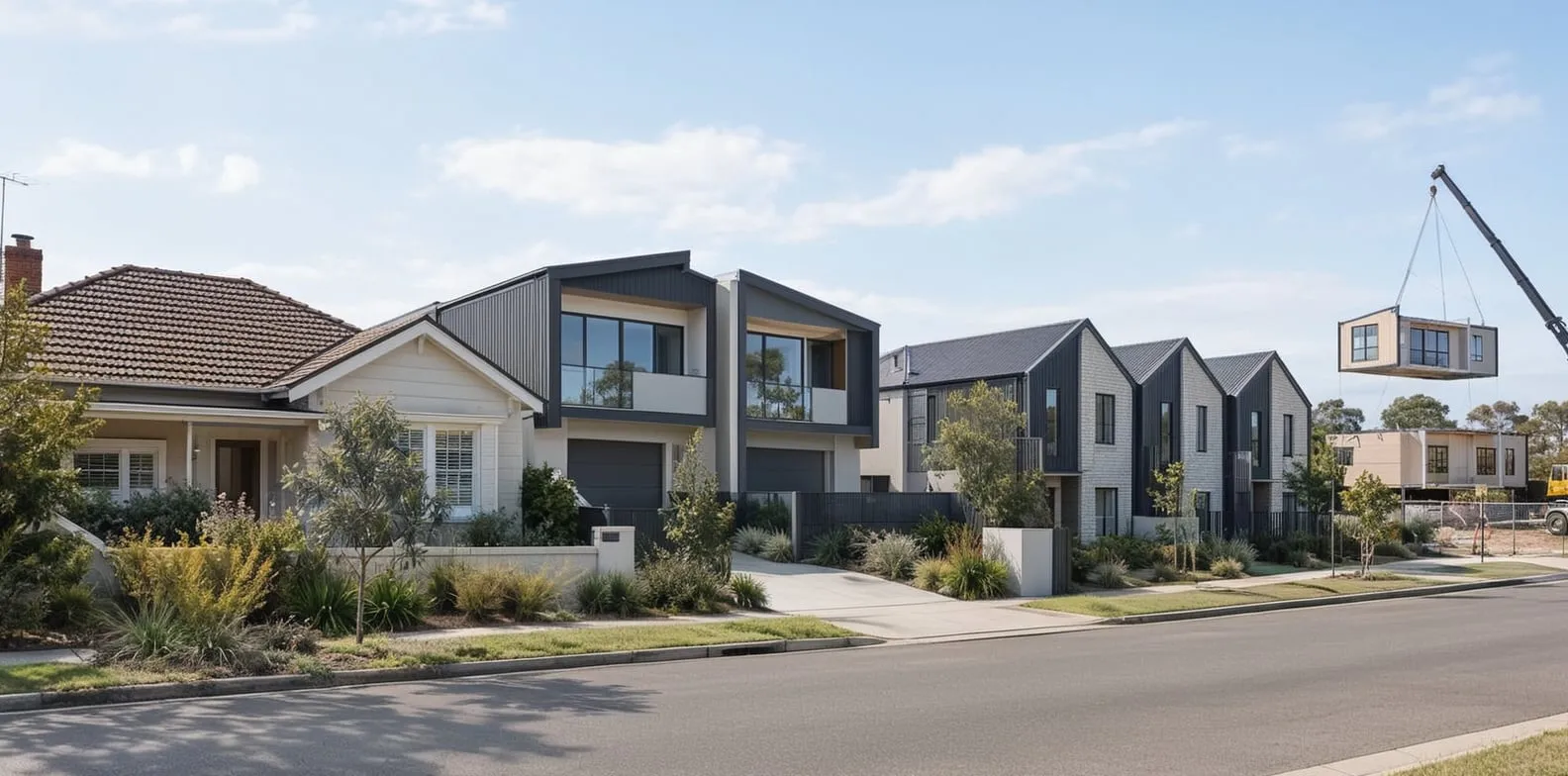 Emerging home types in Australia: modular, prefab, duplexes and the changing dwelling mixDetached houses still make up most of Australia's homes, but their share has slipped over two decades. In 2021, 72.3% of occupied private dwellings were separate houses, down from 75.3% in 2001.
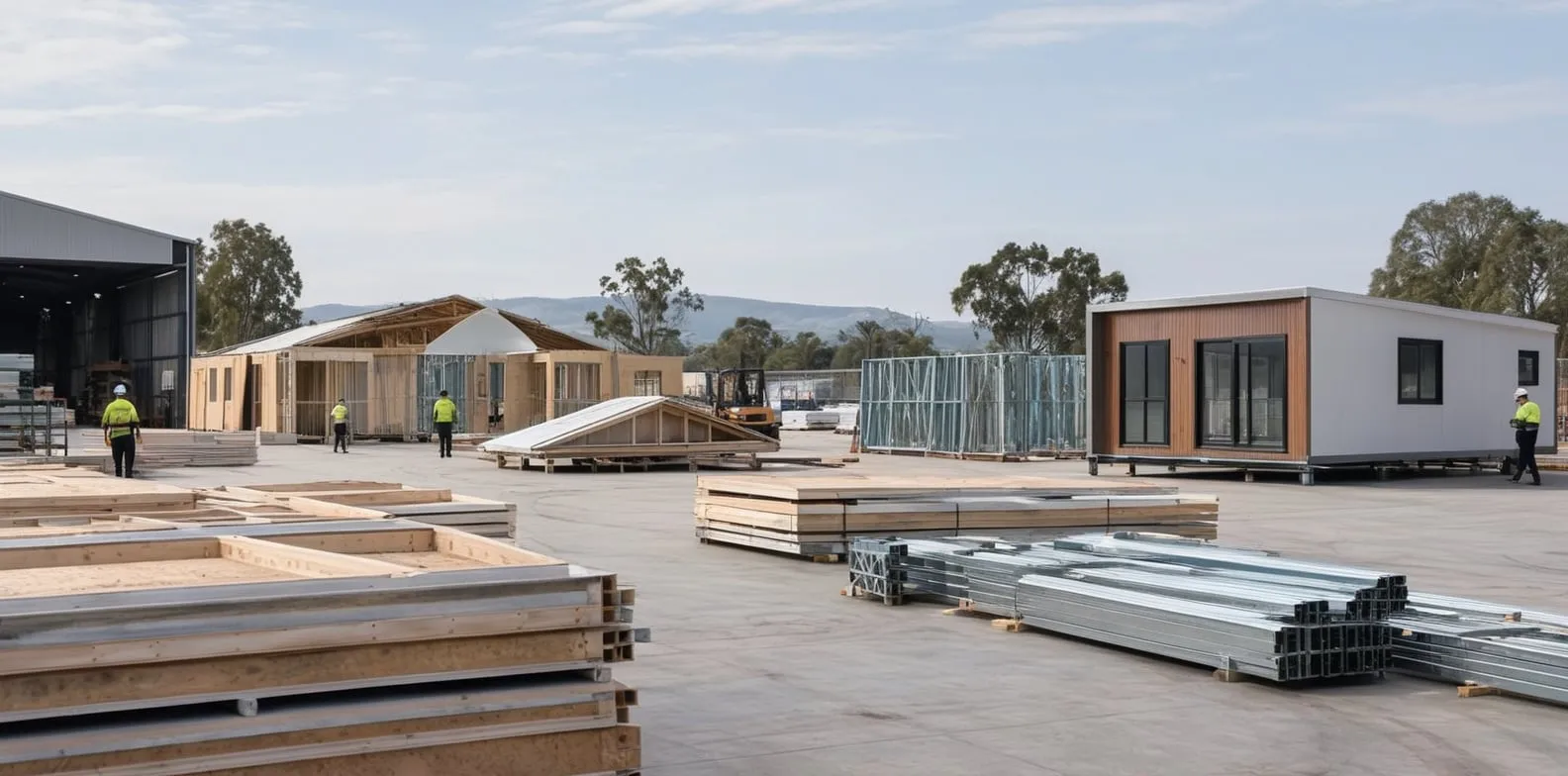 Prefab home statistics in Australia in 2026: market size, costs and adoptionPrefab and modular construction has received increased policy attention in Australia, with governments funding programmes intended to support faster housing delivery. The prefabricated construction se…
Section 01 · Scope
What counts as modular housing in Australia?
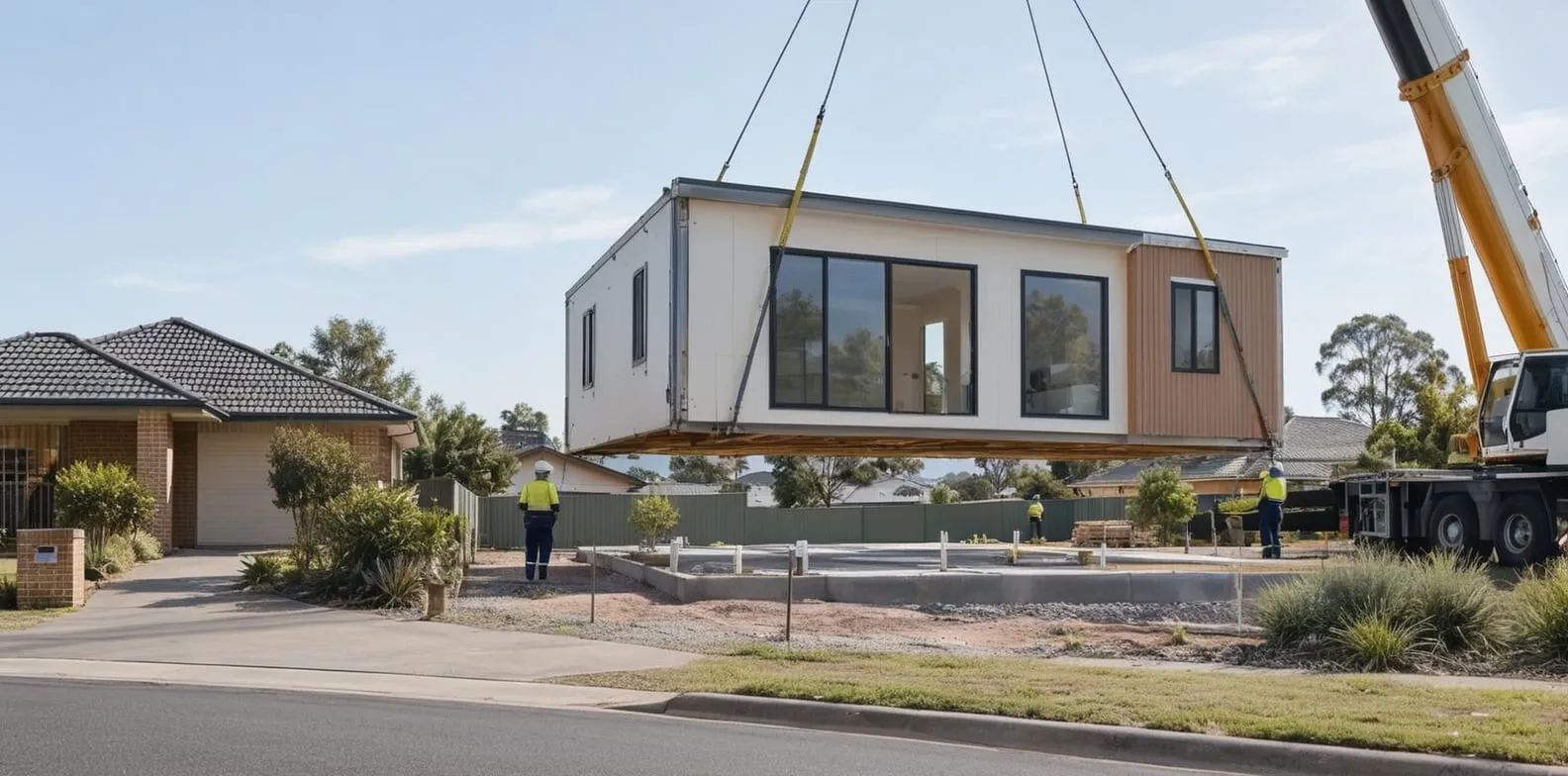
A modular home is a dwelling built as complete sections or modules in a factory, then transported to site and installed on prepared foundations. Modular housing is one form of prefabricated or off-site construction, alongside panelised systems and other factory-made building components.
Modular and off-site housing programmes have been announced or delivered in six Australian states, but the way they are counted is not standardised. Public dwelling data records homes by type, sector and state, but does not separately identify whether a home was built using modular, panelised or other off-site construction methods.
Government sources often group modular, panelised and other factory-built systems under modern methods of construction, or MMC. The terms overlap, which is one reason a clear national modular housing figure is difficult to find.
| Modular and off-site construction methods used in Australian government housing sources, 2024 to 2026 | ||
|---|---|---|
| Type | What it is | Examples in government programmes |
| Prefab (umbrella) | Any building element made off-site and assembled at its final location. This can include flat panels, three-dimensional modules or other factory-made components. | Wall panels, floor and roof systems, bathroom pods, complete modules |
| Panelised | Flat sections such as walls and roof panels made off-site, then fixed to a foundation on site. | SA off-site panelled homes; WA prefabricated timber walls and roofs |
| Volumetric modular | Complete rooms or dwellings built in a factory and craned into place on site. | QBuild MMC homes, NSW modular social homes, WA modular tiny homes |
Source · Australian Government, YourHome, Construction systems; state government programme descriptions, 2024 to 2026.
Section 02 · Speed
How much faster is modular construction in Australia?
Modular construction is reported to be about 20% faster in one NSW social housing programme and up to 50% faster in upper-range official estimates. These figures should not be read as average build-time savings across the whole market, because each source measures a different stage of delivery.
The 20% figure comes from a specific NSW modular social housing programme. The up to 50% figure and the year-to-three-months example are upper estimates that depend on repeatable designs, available factory capacity and sites being ready for installation.
Homes NSW, 2025; Department of Industry, Science and Resources, 2024 and 2025; Housing Australia, NHIF Review, December 2024.
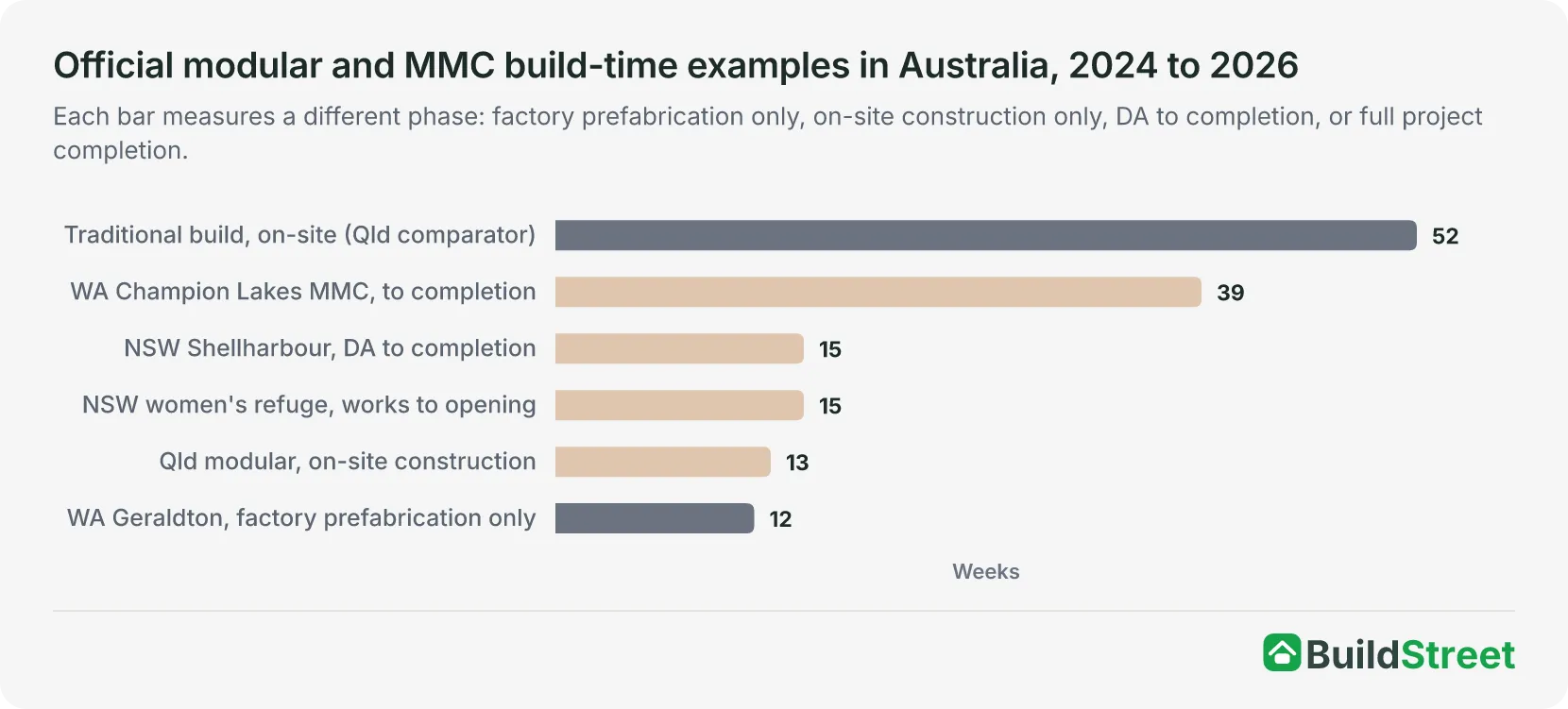
The chart examples measure different stages of delivery:
- In Queensland, on-site modular construction was reported at about three months, compared with about a year for many traditional builds.
- WA's Champion Lakes social homes, built using modern construction methods including prefabricated timber walls and roofs, were completed in about nine months.
- A NSW women's refuge opened about three and a half months after works began, with studios assembled on site in a single day.
- WA's Geraldton tiny homes had a 12-week factory prefabrication window, covering the build only rather than full delivery.
Time savings depend on approvals, site readiness, factory capacity, transport logistics and how repeatable the design is.
Section 03 · Government programmes
Which states have modular or off-site housing programmes?
Queensland, Tasmania, New South Wales, Western Australia, Victoria and South Australia have announced, funded or delivered modular, prefabricated or off-site housing programmes in recent years. Most are focused on social, affordable, regional or key-worker housing. The counts mix completions, contracts, commitments and targets. A target is not a completion, and a home under construction is not yet built.
Queensland · Large state programme pipeline
QBuild Modern Methods of Construction
- Delivered or contracted: more than 215 modular social homes
- Committed: up to 600 homes through the State Budget as a target
- Methods: volumetric, flat-pack and kit-of-parts
- Purpose: social housing and frontline-worker accommodation, including regional Queensland
Source: Queensland Government, 2024 and 2025.
Tasmania
ModHomes and Modular Housing Finance Guarantee
- Delivered: more than 250 modular homes across Tasmania since 2021
- Committed: a further 200 homes
- Finance: Modular Housing Finance Guarantee, June 2026
Source: Homes Tasmania, December 2025; Premier of Tasmania, October 2025 and June 2026.
New South Wales
Modular housing trial and expansion
- Trial: $10M for demonstration homes; first tenants have moved in
- Expansion: 90 modular homes announced for the year ahead
- Speed: three Shellharbour homes completed 14 to 16 weeks from development approval
Source: Homes NSW, 2025 and 2026.
Western Australia
Social housing, tiny homes and manufacturing
- Capacity: $49M in grants to 15 local manufacturers
- Social housing: 81 homes across six developments using modern construction methods, including Champion Lakes in nine months
- Regional: 16 modular tiny homes for Geraldton
Source: WA Government, 2025 and 2026.
Victoria
Homes Victoria modular programme
- Funding: $30.38M for 114 modular homes
- Regional: a further 25 modular homes in a $10.1M Horsham project for up to 47 people
- Purpose: social and regional housing
Source: Premier of Victoria, 2022 and January 2024.
South Australia
SA Housing Trust off-site tender
- Target: 120 turn-key homes using off-site components over about four years
- Market share: modular has been about 5% of the SA market, occurring in health, education and commercial building
Source: SA Housing Trust, June 2025.
Federal and state milestones, 2021 to 2026
Modular housing activity moved from early state delivery programmes to national policy support, manufacturing grants and new finance products between 2021 and 2026.
From 2021–22
Tasmania scales modular social housing
More than 250 modular homes delivered through Homes Tasmania since 2021, with modular used across the state toward a target of 10,000 social and affordable homes by 2032. Not all of that target is modular.
2024
Queensland and NSW commit to modular social housing
Queensland's Budget supported up to 600 modular homes, with on-site construction of about three months against about a year for many traditional builds. NSW began a modular housing trial within a wider essential-housing package.
February 2025
Productivity Commission examines housing construction
The Commission found housing construction productivity has declined over decades and identified slow approvals, low innovation, a fragmented industry and workforce gaps as barriers. Potential savings from modular are conditional on production volume, design repetition and site conditions.
June 2025
South Australia tenders for 120 off-site homes
SA Housing Trust announced a tender for 120 turn-key homes using off-site components over about four years.
2025–26 Budget
Commonwealth commits $54M for prefab and modular housing
The commitment totals $54M, including $49.3M for states and territories and $4.7M for voluntary certification. A separate $120M from the National Productivity Fund supports consistent regulation of modern construction methods.
May 2026
WA funds manufacturing capacity
In May 2026, WA announced $49M through the Housing Innovation Fund for 15 local housing-manufacturing projects using prefabrication, modular and other modern methods of construction.
June 2026
Tasmania announces a Modular Housing Finance Guarantee
Designed to back construction loans while homes are built off-site, then cease once homes are installed and become standard mortgage security.
Section 04 · Finance
Why standard construction loans do not suit modular home builds
Standard construction loans release money in stages tied to on-site progress. That model does not always fit a modular build, where most of the value is created in a factory before anything appears on the block. Without a structure on site, there is little for a lender to secure a loan against.
Two governments have introduced products to bridge that gap. Tasmania's Modular Housing Finance Guarantee, announced in June 2026, backs construction lending during the factory build phase and ceases once the home is installed and can serve as standard mortgage security.
| Australian construction-loan stage payments and the modular factory-build finance gap, 2025 to 2026 | |
|---|---|
| Stage | Milestone |
| Stage 1 | Slab |
| Stage 2 | Plate height |
| Stage 3 | Roof cover |
| Stage 4 | Lock-up |
| Stage 5 | Practical completion |
| Modular factory build | Most of the home is built and paid for here, off the buyer's land, before Stage 1 is reached. Standard staged construction finance does not map neatly to this phase; specialist modular finance may require different progress-payment arrangements. |
Source · Keystart, construction payment stages and modular home loan guidance; Tasmanian Government, June 2026.
Both WA and Tasmania have responded with specific products:
- In Western Australia, a government-backed lender has introduced a low-deposit loan covering land, construction, transport and connection to foundations, recognising that modular builds require larger upfront payments.
- Tasmania's guarantee backs lending during the factory phase and ends once the home is installed on site.
In both cases, the finance issue is that much of the home's value exists off-site before installation.
Section 05 · Cost
How much does modular housing cost in Australia?
Tasmania has claimed that modular homes take half the time to build and cost about 70% of a comparable traditionally built home. A separate official estimate says modern methods of construction, including modular and prefabricated homes, can reduce overall costs by up to 20%.
Neither figure is a national modular housing price benchmark. Available cost evidence comes from government claims, programme estimates and project budgets rather than a broad market survey.
Tasmania · Ministerial claim
About 70% of cost
- ModHomes are claimed to take half the time of a traditional build and cost about 70% of a traditionally constructed home. This is a programme claim, not a measured national price benchmark.
- Source: Premier of Tasmania, 10 October 2025. · Official · programme claim
NSW citing the Productivity Commission
Up to 20% lower
- Modern methods of construction such as modular and prefabricated homes can reduce overall costs by up to 20% and be up to 50% faster than traditional building. This is an estimate of potential savings, not a realised national cost series.
- Source: NSW Government, 2026, citing a Commonwealth Productivity Commission estimate. · Official · potential, not guaranteed
National retail price
No official data published
- No Australian government agency publishes a modular-specific price series or national average. The official cost evidence available is a mix of government claims, state programme figures and project budgets; none is a national modular retail-price series.
- Source: Review of ABS Building Activity methodology and official sources, as at 19 June 2026. · To be updated if published
Potential savings are not guaranteed. Modular housing costs can vary with production volume, design repetition, transport distance, site preparation, foundations, service connections and programme specifications.
Modular construction can cost as much as, or more than, a traditional on-site build in some cases. Recent public funding has focused on manufacturing capacity, certification, finance products and direct state procurement rather than producing a national modular housing price benchmark.
Section 06 · Adoption
Why isn't modular housing more widespread in Australia?
Modular housing adoption in Australia is limited by regulation, finance, industry capacity and scale. These barriers appear across government programmes and policy sources, especially where approval systems, construction loans and production models were designed around conventional on-site building.
The available market-share evidence is limited. The only market-share figure found is South Australia's estimate that modular construction accounts for about 5% of the state's market, with use concentrated in health, education and commercial building rather than residential housing.
Four barriers recur across the programmes and policies reviewed:
- regulation built for on-site construction
- finance models that do not suit factory workflows
- demand and industry factors, including low innovation, fragmented industry structure and skills gaps
- scale and logistics constraints that can keep per-home costs higher at low production volumes.
Regulation and certification
Approval and inspection processes were designed for on-site construction. A modular home may arrive near-complete from a factory, which does not map neatly onto stage inspections.
Earlier laws treated prefabricated and manufactured homes differently, and slow or inconsistent approvals have been cited as potential barriers to finance and consumer confidence. Policy responses include NSW reforms to recognise prefabricated buildings in law, a voluntary national certification scheme and $120 million from the National Productivity Fund to support more consistent regulation.
Source: NSW Government, 2025 and 2026; Federal Building Ministers, 2025; Treasury, 2025.
Finance
Construction loans pay against on-site progress. A factory needs capital before anything appears on site, and the home's value is held off the buyer's land until installation.
Limited collateral during off-site construction can restrict lending, and modular builds may require larger upfront payments. Policy responses include Tasmania's Modular Housing Finance Guarantee, a WA low-deposit modular loan and federal work with lenders on modular finance.
Source: Tasmanian Government, June 2026; WA Government, 2025.
Demand and industry
Several constraints on uptake are cited in the sources reviewed, including demand for modular and off-site construction, workforce settings, low innovation and a fragmented industry structure.
Factory-based construction can require different skills and production settings from conventional on-site building. No official demand-side survey of consumer attitudes to modular housing was found.
Source: Productivity Commission, February 2025.
Scale and logistics
Potential savings depend on production volume and design repetition. Early, low-throughput programmes can cost more per home, while large modules can add transport and access costs.
Site access, module width, crane access and overhead wires are practical constraints. YourHome also notes that no single construction system suits every site or climate. Policy responses include WA's $49 million in grants to 15 local manufacturers and federal support for manufacturing capacity.
Source: Australian Government, YourHome; Productivity Commission, February 2025; WA Government, 2026.
References
- YourHome — Construction systems · yourhome.gov.au
- ABS Building Approvals, Australia (latest release, Cat. 8731.0) · Australian Bureau of Statistics
- Treasury — Increasing housing supply · beta.treasury.gov.au
- The Albanese Labor Government is building more homes more quickly, and making them easier to buy, March 2025 · minister.industry.gov.au
- Roundtable to support growth of pre-fabrication construction industry, June 2024 · minister.industry.gov.au
- Building ministers progress on modular housing and new National Construction Code, March 2024 · minister.industry.gov.au
- Housing Australia — NHIF Review, December 2024 · housingaustralia.gov.au
- Productivity Commission — Housing construction productivity: Can we fix it? · pc.gov.au
- Homes NSW — First tenants call public modular housing home · nsw.gov.au
- New building laws for a new era of approvals and modern methods of construction · nsw.gov.au
- NSW Government — From DA to done in 14 weeks: Three new modular homes delivered in Shellharbour · nsw.gov.au
- NSW Department of Communities and Justice — Modular build refuge opens 3.5 months after construction begins · dcj.nsw.gov.au
- Queensland Government — Homes for Queenslanders: Delivering modular social homes across the state · statements.qld.gov.au
- Homes for Queenslanders: Budget delivers plan, 600 modular homes · statements.qld.gov.au
- QBuild — Modern methods of construction program · housing.qld.gov.au
- WA Government — Cook Government delivering $49 million for local housing manufacturers · wa.gov.au
- WA Government — New construction methods accelerate social housing at record pace · wa.gov.au
- WA Government — Major housing boost with 16 new tiny social homes for Geraldton · wa.gov.au
- Keystart — What's different about construction payments · keystart.com.au
- Keystart — Exciting changes help more Western Australians access affordable homes · keystart.com.au
- Premier of Tasmania — Innovative solutions front and centre on World Homelessness Day · premier.tas.gov.au
- Homes Tasmania — Modular construction · homestasmania.com.au
- Premier of Tasmania — Tasmania unlocks faster, cheaper housing with modular finance guarantee · premier.tas.gov.au
- SA Housing Trust — Trust homes built with pre-constructed wall panels · housing.sa.gov.au
- Department for Housing and Urban Development SA — Prefab housing project launched ahead of industry roundtable · dhud.sa.gov.au
- Premier of Victoria — Modular Homes Housing People Across Victoria · premier.vic.gov.au
- Premier of Victoria — Delivering More Homes For Regional Victorians · premier.vic.gov.au
